
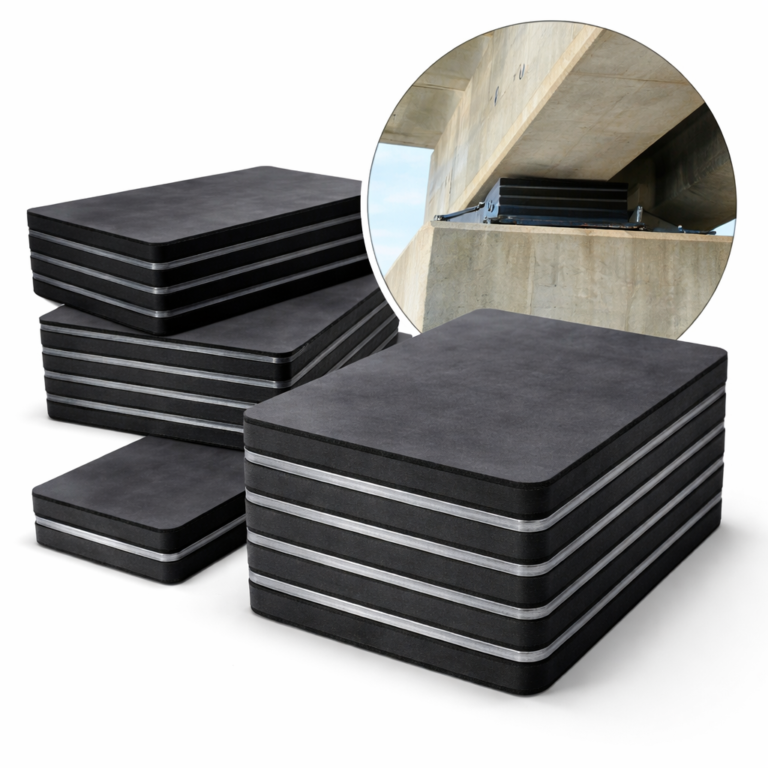
Bearing Pads for Bridges
Elastomeric bearing pads that support bridge structures, absorb movement, and reduce vibration.
Request a QuoteBearing pads are elements in bridge construction, providing a supportive interface between the bridge superstructure and its substructure. Their primary function is to evenly distribute loads, accommodate movements caused by temperature changes, and reduce vibrations, ensuring the durability and safety of the bridge.
Bearing pads are installed at the points where the bridge deck meets its supports, such as piers and abutments. Their use is essential in both new constructions and during refurbishment projects to ensure compliance with modern engineering standards and safety regulations.
Types of Bearing Pads
- Elastomeric (Neoprene) Bearing Pads – flexible, durable, and resistant to weathering; suitable for most small to medium-span bridges.
- PTFE (Polytetrafluoroethylene) Sliding Bearings – incorporate a low-friction PTFE surface for enhanced movement; used where large longitudinal or lateral movement is expected.
- Steel Bearing Pads – high strength, suitable for heavy loads and specialised applications, often combined with elastomeric layers.
Key Features
- Load distribution across the bridge structure
- Movement accommodation for thermal expansion and contraction
- Vibration and structure-borne noise reduction
- Reduced friction between structural elements, extending bridge lifespan
- High shock-absorption capability
Applications
- New bridge construction
- Bridge refurbishment projects
- Piers and abutments
Need a Custom Rubber Solution?
Contact our engineering team for bulk orders, custom compounding, and specialized manufacturing tailored specifically to your industry needs.